

A knee replacement is not just another medical decision. For many patients, it is the point where years of pain, stiffness and limited movement finally need a proper long-term answer. When daily activities such as walking, climbing stairs, standing for long periods or sleeping comfortably become difficult, advanced knee replacement in Delhi can help restore mobility and quality of life.
The success of surgery depends on more than the implant alone. It depends on the surgeon, diagnosis, surgical planning, implant alignment, hospital support and post-surgery rehabilitation. Dr Ashish Jain brings focused experience in joint replacement, computer-assisted techniques and patient-centred knee care at Max Super Speciality Hospital, Shalimar Bagh and Max PPA Pitampura.
Why Advanced Knee Replacement Is Different Today
Modern knee replacement has changed significantly from older surgical methods. Today, the goal is not only to replace a damaged joint but to improve alignment, reduce tissue trauma, support early movement and make recovery more predictable.
Advanced techniques allow the surgeon to plan the procedure with better precision. This can help improve implant positioning, balance the knee more accurately and reduce unnecessary damage to surrounding tissues. For patients, this often means better movement, smoother recovery and more confidence after surgery.

Who Needs Knee Replacement Surgery?
Knee replacement is usually considered when arthritis or joint damage has progressed to a stage where non-surgical treatments no longer provide enough relief. Patients often reach this stage after months or years of medication, injections, activity changes and physiotherapy.
You may need to consult a knee replacement specialist if knee pain affects your sleep, walking distance, stair climbing, work, or independence. Severe osteoarthritis, rheumatoid arthritis, post-traumatic arthritis, deformity, bone-on-bone pain and failed previous treatments are common reasons surgery may be advised.
Procedures Offered by Dr Ashish Jain
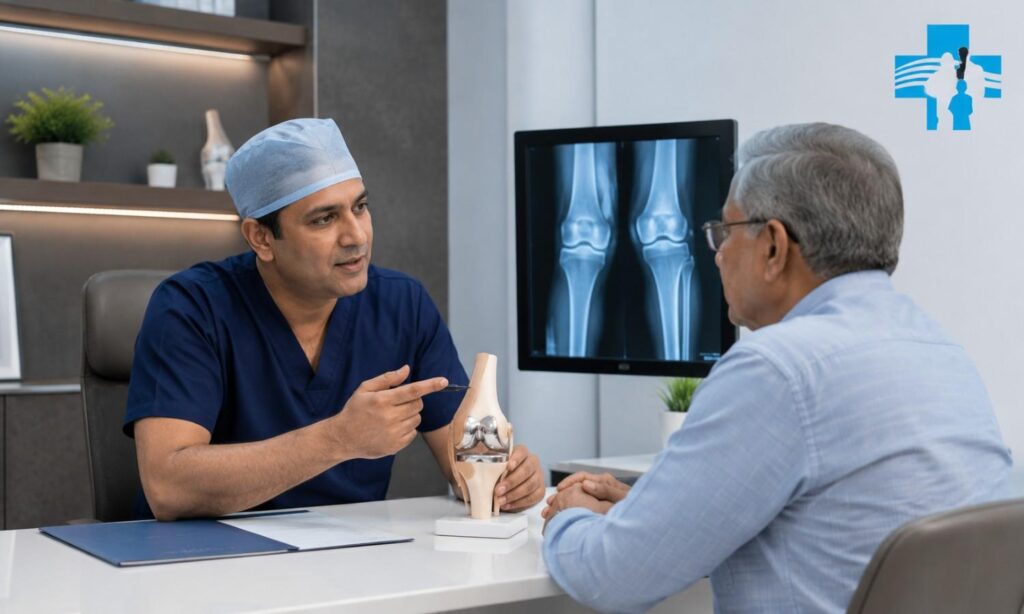
Treatment is never one-size-fits-all. Dr Ashish Jain assesses the patient, X-rays, joint condition, age, activity level and medical history before recommending the right procedure.
Total Knee Replacement
Total knee replacement is recommended when the entire knee joint is badly damaged. The worn-out joint surfaces are replaced with carefully selected artificial components designed to reduce pain and restore movement. It is commonly advised in advanced arthritis cases where daily life has become restricted.
Partial Knee Replacement
When only one section of the knee is affected, partial knee replacement may be suitable. This preserves healthy bone and tissue while replacing only the damaged compartment. For selected patients, it can feel more natural and allow faster return to routine activity.
Computer-Assisted Knee Replacement
Computer-assisted knee replacement uses navigation support during surgery to improve implant placement and alignment. Better alignment can reduce long-term wear and support more stable outcomes. This is especially useful in complex anatomy, deformity or cases where precision is critical.
Revision Knee Replacement
Revision knee replacement is performed when a previous implant has loosened, failed, become infected or no longer functions properly. This is a technically demanding surgery that requires deep experience in joint reconstruction and implant planning.
The Full Treatment Journey
Good results begin before the operation. A proper treatment journey includes diagnosis, surgical planning, patient counselling, surgery, physiotherapy and follow-up. Every step matters.
Before surgery, patients undergo a detailed assessment that may include X-rays, medical evaluation and discussion of implant options. During surgery, the focus is precise alignment and safe joint reconstruction. After surgery, rehabilitation begins early so the patient can regain strength and confidence step by step.
Recovery After Advanced Knee Replacement
Most patients begin assisted walking soon after surgery, depending on their overall health and surgical plan. The first few weeks focus on pain control, swelling reduction, knee bending and safe walking. Structured recovery is important because surgery replaces the joint, but physiotherapy restores function.
A personalised rehabilitation plan helps patients improve strength, balance and range of motion. Patients are guided on walking support, exercise progression, stair use and safe return to daily activities.
For patients who want to understand recovery and movement support after surgery, the clinic also provides dedicated physiotherapy guidance as part of post-operative care.
Why Patients Choose Dr Ashish Jain
- Nearly 18 years of focused experience in knee and joint replacement care
- International training and expertise in advanced surgical methods
- Experience with total, partial, bilateral, computer-assisted and revision knee replacement
- Practice at Max Super Speciality Hospital, Shalimar Bagh and Max PPA Pitampura
- Clear communication before surgery and structured support after surgery
- Patient-first approach focused on pain relief, mobility and long-term function
What About Knee Replacement Cost?
The cost of knee replacement depends on the type of surgery, implant, hospital stay, medical condition, rehabilitation needs and whether one or both knees are treated. Patients can review details on knee replacement surgery cost in Delhi and discuss a personalised estimate during consultation.
Getting Back to the Life You Want
A well-planned knee replacement can do more than reduce pain. It can help a person walk with confidence again, sleep better, travel more comfortably and return to everyday routines that had become difficult because of chronic knee problems.
If knee pain has started controlling your life, consult Dr Ashish Jain for a detailed evaluation and personalised treatment plan. Book your consultation at Max Super Speciality Hospital, Shalimar Bagh.
Frequently Asked Questions
Q. What makes Dr Ashish Jain an expert in advanced knee replacement in Delhi?
A. Dr Ashish Jain has nearly 18 years of experience in knee and joint replacement care, with expertise in total, partial, revision and computer-assisted knee replacement procedures.
Q. How soon can I walk after knee replacement surgery?
A. Most patients begin walking with support within 24 to 48 hours, depending on their health, surgical plan and rehabilitation progress.
Q. Is partial knee replacement a good option?
A. Partial knee replacement can be a good option when damage is limited to one compartment of the knee. It preserves healthy tissue and may allow a faster, more natural recovery in selected patients.
Q. How long does full recovery take?
A. Many patients return to basic daily activities within 6 to 12 weeks. Complete strengthening and confidence may take longer depending on age, health and physiotherapy commitment.
Q. How do I book a consultation with Dr Ashish Jain?
A. You can book a consultation through the contact page or call the clinic team for appointment assistance at Max Super Speciality Hospital, Shalimar Bagh.