
Overview
Delhi has hundreds of orthopaedic surgeons. A significant number of them offer knee replacement. And most of their websites say roughly the same things about experience, expertise, and patient care.
For someone facing a knee replacement decision, that noise makes the choice harder rather than easier. The question is not which surgeon has the most impressive homepage. It is what actually separates a surgeon who produces consistently good knee replacement outcomes from one who does not.
Dr Ashish Jain practices at Max Super Speciality Hospital in Shalimar Bagh, one of Delhi’s leading tertiary care hospitals, with 18 years of experience specifically in joint replacement surgery. This is a practical guide to what actually matters when making this decision.
Does Specialisation in Knee Replacement Actually Matter?
Orthopaedics covers fractures, spine, sports injuries, paediatric conditions, and joint replacement. A surgeon who divides their practice across all of these is not the same as one whose primary focus is joint replacement.
Knee replacement is a technically precise procedure. Implant alignment, bone preparation, soft tissue balancing, and fixation technique all affect how the knee functions after surgery. The volume of procedures a surgeon performs in a year directly correlates with the precision they develop in these areas.
Dr Ashish Jain’s practice is built specifically around joint replacement and reconstruction. Knee replacement is not one of the many services. It is the primary focus, which is why his outcomes reflect a depth of experience that generalist orthopaedic practice does not produce.
What Qualifications and Training Should You Look For?
The baseline is an MS in Orthopaedics from a recognised institution. Beyond that, fellowship training specifically in joint replacement or reconstructive surgery indicates a surgeon who invested additional time in this specific area after their core qualification.
International training matters too. Exposure to high-volume joint replacement centres in other countries brings techniques and protocols that may not yet be standard in India. Dr Ashish Jain is internationally trained, having completed his MBBS from Kasturba Medical College, Manipal and gone on to specialist training that has positioned him as a mentor for other practising surgeons in minimally invasive joint replacement techniques.
What Technology Is Available and Why Does It Matter?
The surgical technique matters. So does the infrastructure supporting it.
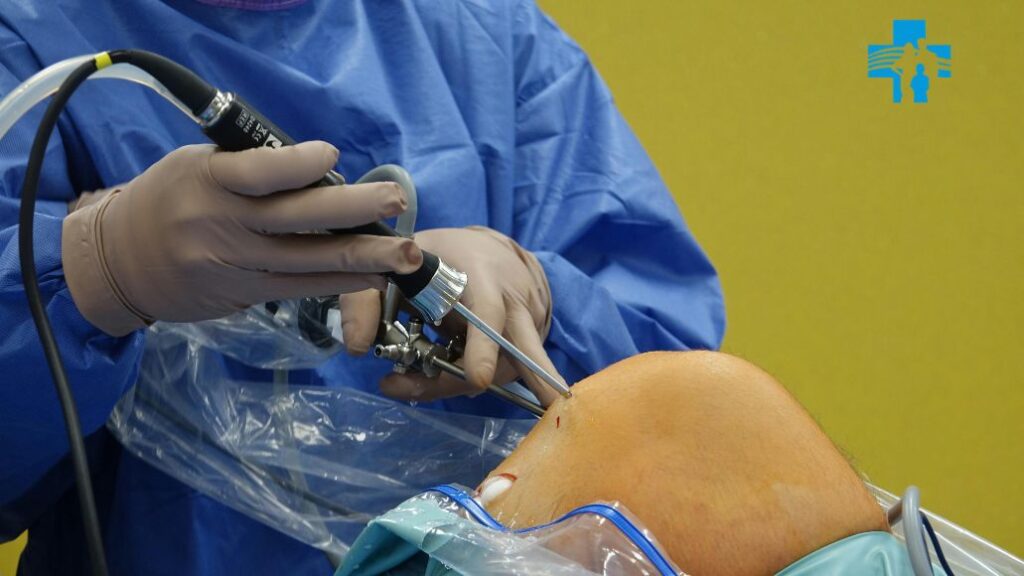
Minimally invasive knee replacement uses smaller incisions and less tissue disruption than conventional open surgery. Recovery is faster, blood loss is lower, and post-operative pain is reduced. Not every surgeon is trained in minimally invasive techniques, and not every hospital has the instrumentation to support it.
Computer-assisted knee replacement surgery uses navigation technology to guide implant placement with precision beyond what manual technique alone achieves. At Max Super Speciality Hospital, Shalimar Bagh, the infrastructure supports both computer-assisted and advanced surgical techniques. The facility and the surgeon’s training align, which is not always the case.
What Should a Good Consultation With a Knee Replacement Surgeon Look Like?
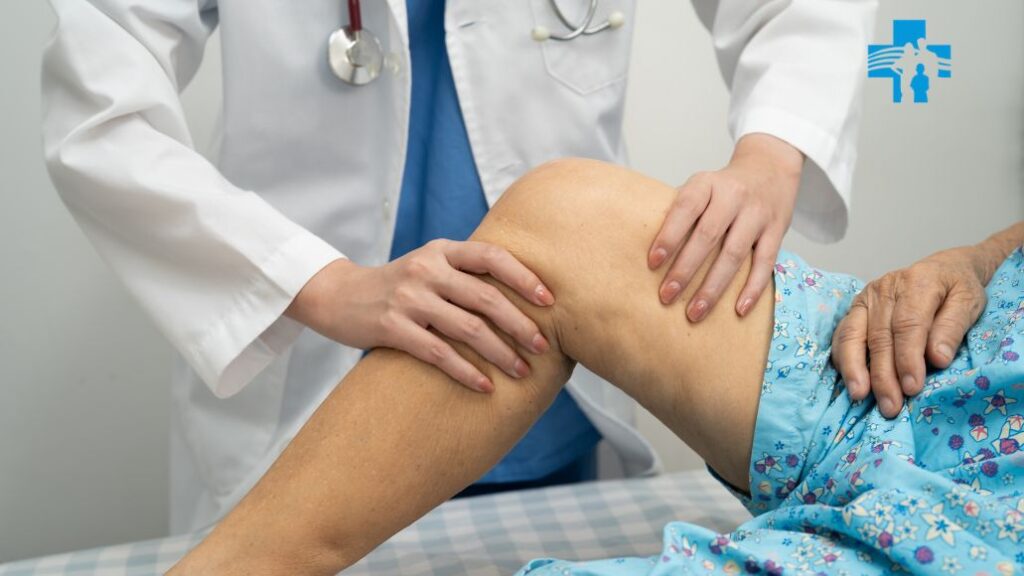
A consultation that is essentially a preamble to scheduling surgery is not adequate. A proper assessment includes:
• Clinical examination of the knee, including range of motion, stability, and alignment
• Review of imaging, including X-rays and, where relevant, MRI
• Discussion of what conservative treatment has been tried and for how long
• An honest assessment of whether replacement is the right option at this stage
• A clear explanation of the procedure, implant options, and recovery timeline
• Realistic information about risks and what happens if complications arise
Dr Ashish Jain’s approach involves a team-based model of care where the consultation, surgery, and rehabilitation are coordinated rather than treated as separate events. You can read more about his approach to knee joint replacement before booking.
Does the Hospital Matter as Much as the Surgeon?
Yes. A skilled surgeon in a poorly equipped facility is constrained by the infrastructure around them.
Max Super Speciality Hospital, Shalimar Bagh, is a tertiary care centre with the diagnostic, surgical, and rehabilitation infrastructure that complex joint replacement requires. Before your consultation, you may also want to review information on knee replacement surgery cost in Delhi. State-of-the-art diagnostics, internationally accepted surgical protocols, and a complete rehabilitation programme are what the facility offers alongside Dr Ashish Jain’s surgical expertise.
For patients travelling from across Delhi NCR, the location in Shalimar Bagh is accessible from North Delhi, West Delhi, and surrounding areas without the congestion of central Delhi.
What Questions Are Worth Asking Before You Commit?
Before agreeing to surgery with any surgeon in Delhi, these are worth asking clearly:
• How many knee replacement procedures do you perform per year
• Are you trained in minimally invasive and computer-assisted techniques
• What implant systems do you use and why
• What does realistic recovery look like for someone my age and activity level
• What is your protocol if complications arise after surgery
The answers tell you more about the surgeon than any credentials on a website.
Conclusion
The right orthopaedic surgeon for knee replacement in Delhi is not the one with the most prominent listing or the most impressive website. It is the one with a specific joint replacement focus, high procedural volume, appropriate technology access, and a communication style to give you an honest picture of what surgery involves and what to expect. If you are based in North Delhi, learn more about total knee replacement in Shalimar Bagh and the advantages of advanced robotic techniques covered in our robotic knee replacement guide.
Frequently Asked Questions
Q. How do I know if I actually need knee replacement surgery in Delhi?
Persistent knee pain that significantly limits daily activity, has not responded to conservative treatment, and is accompanied by structural damage visible on imaging are the main indicators. A proper clinical assessment with Dr Ashish Jain will give you a clear answer.
Q. Is minimally invasive knee replacement available in Delhi?
Yes. Dr Ashish Jain is trained in minimally invasive joint replacement techniques and practises at Max Super Speciality Hospital, Shalimar Bagh, which has the infrastructure to support it.
Q. What is the recovery time after knee replacement surgery in Delhi?
Most patients walk with support within 24 to 48 hours of surgery. Return to light daily activity takes 6 to 8 weeks. Full functional recovery takes over 3 to 6 months with physiotherapy.
Q. Can I get a second opinion on whether I need knee replacement?
Yes, and it is worth doing if you have been told you need surgery without a thorough assessment. Dr Ashish Jain offers consultations for patients who want an informed second opinion before making a decision.