
Overview
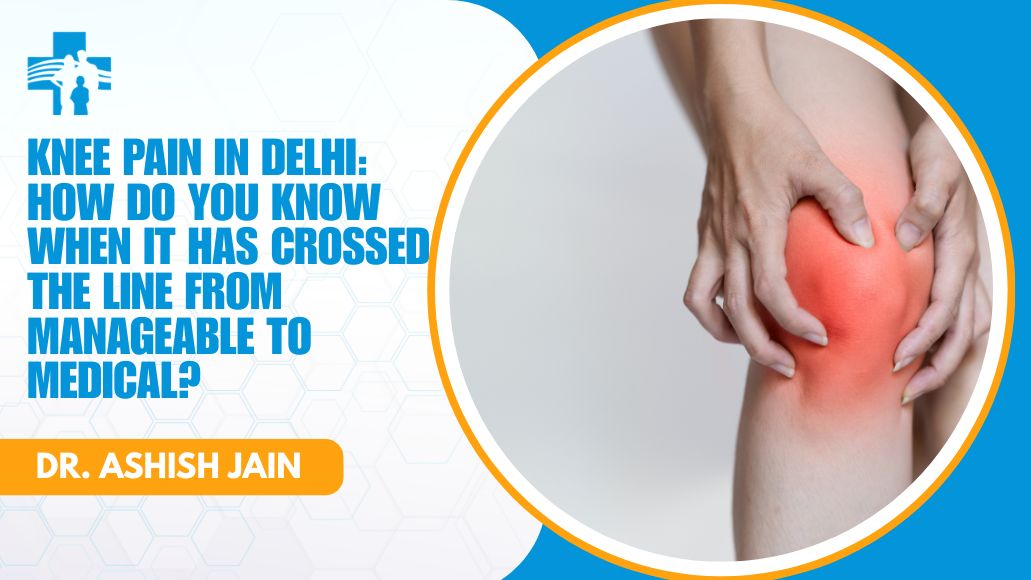
Most knee pain starts quietly. A dull ache after a long day. Stiffness in the morning that loosens after a few minutes of movement. Discomfort on stairs that you learn to manage by taking them slower. People adapt. They adjust their habits. They buy knee support from a pharmacy and carry on.
This adaptation period is not inherently wrong. Many minor knee complaints resolve on their own with rest and basic care. The problem is that the same coping behaviour that makes sense for a temporary strain can delay proper treatment for something that is genuinely progressing and needs attention before it gets harder to manage.
Dr Ashish Jain at Max Super Speciality Hospital, Shalimar Bagh, has 18 years of experience in knee joint replacement and orthopaedic surgery. This is a guide to understanding when knee pain has moved beyond the manageable category and what a proper specialist assessment actually involves.
What Normal Knee Pain Looks Like Versus What Needs Attention
Not every knee pain is a red flag. The knee is a heavily used joint, and some degree of occasional discomfort from overuse, minor strains, or temporary inflammation is common and usually resolves with rest.
The following are signs that the pain is no longer in the self-resolving category:
• Pain that has been present consistently for more than 6 weeks without a clear improving trend
• Swelling that appears either immediately after an injury or gradually builds over days
• A catching, locking, or giving-way sensation during normal movement
• Pain that disturbs sleep regularly
• A noticeable reduction in how far you can walk before pain becomes limiting
• Stiffness after sitting for a period that takes longer than 15 to 20 minutes to ease
• Pain that is consistently worse on one side of the knee, which can indicate compartment-specific damage
Any one of these persisting beyond a few weeks warrants a proper assessment rather than continued self-management.
Why Early Assessment Changes the Outcome
The biology of knee joint damage is not neutral over time. Cartilage does not regenerate. Bone damage from longstanding arthritis is cumulative. And the muscles that support the knee weaken from disuse when pain limits activity, which creates additional instability that accelerates joint stress.
A knee condition assessed and treated early is almost always a simpler clinical problem than the same condition assessed after months or years of progression. This is not a reason to panic about every ache. It is a practical argument for not indefinitely postponing a proper assessment of something that is genuinely affecting how you move and live.
Dr Ashish Jain’s approach at Max Shalimar Bagh begins with understanding the full picture of what is happening in the knee before any recommendation is made. X-rays, clinical examination, and a thorough conversation about when the pain started, what makes it better or worse, and how it is affecting daily activity all inform the clinical decision rather than defaulting to a standard protocol.
What Conditions Cause Knee Pain That Needs Specialist Attention
Osteoarthritis is the most common cause of significant knee pain in adults over 45. It involves the progressive breakdown of cartilage that cushions the joint. Early to moderate arthritis can be managed well without surgery. Advanced arthritis with severe cartilage loss and bone-on-bone contact is when knee replacement surgery becomes the most appropriate option.
Ligament injuries, particularly ACL and MCL tears, are common in people who are active. The knee may feel unstable, buckle during movement, or swell rapidly after an incident. These need imaging and clinical assessment rather than just rest.
Meniscal tears cause pain that is often localized to one side of the knee, a catching or locking sensation, and pain with certain movements. Some tears heal conservatively. Others need surgical management.
Patellofemoral pain causes pain around or behind the kneecap, often worse going up and down stairs or after sitting for long periods. Younger, active patients are commonly affected.
Inflammatory arthritis, including rheumatoid arthritis, causes joint inflammation that needs specific management distinct from osteoarthritis treatment.
Each of these has a different treatment pathway, and getting the diagnosis right is the starting point for everything else.
What a Specialist Assessment With Dr Ashish Jain Involves
Where conservative management is appropriate, physiotherapy is often the first structured step before any conversation about surgery begins.
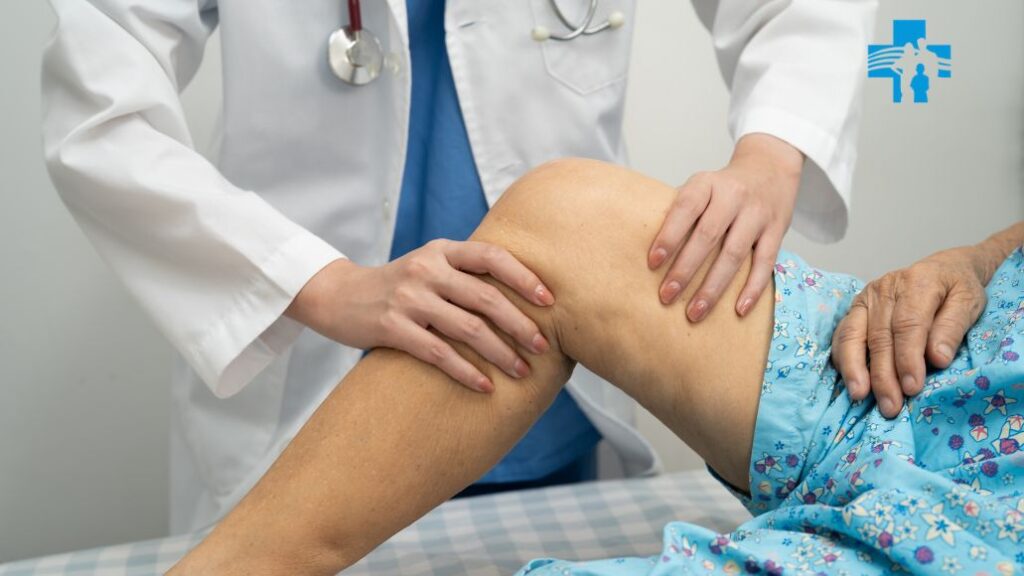
The assessment is a thorough clinical evaluation rather than a brief appointment. It includes examination of the knee’s range of motion, stability testing, assessment of the joint line and surrounding structures, and review of imaging. Where imaging has not been done, X-rays are arranged and interpreted in the context of the clinical findings.
The outcome is a clear picture of what is happening in the knee and what the options are. For many patients, that conversation confirms that surgery is not necessary and that physiotherapy, injections, and activity modification will manage the problem well. For others, it confirms that a particular procedure would resolve something that conservative treatment cannot address.
Physiotherapy is integrated into the care pathway at Dr Ashish Jain’s practice. Patients who do not need surgical intervention are directed toward appropriate rehabilitation with the orthopaedic team available for reassessment if things change.
When Surgery Becomes the Conversation
Surgery is not the first answer to knee pain. But there is a point where it becomes the most appropriate answer, and recognising that point early enough to plan properly makes the surgical outcome better.
For patients with advanced arthritis where cartilage is severely compromised, pain is affecting sleep and daily function significantly, and conservative management has stopped providing meaningful relief, total knee replacement produces results that no other treatment matches. The surgery replaces damaged surfaces with components that restore pain-free function. For patients who genuinely need it, the change in quality of life is dramatic.
Unicompartmental knee arthroplasty is available for patients where damage is confined to one area of the joint, offering a less invasive surgical option with faster recovery than total replacement.
Conclusion
The line between manageable knee pain and medical knee pain is not always obvious at the moment. The clearest signal is when the pain is affecting how you live, not just occasionally but consistently, and when self-management has stopped producing meaningful improvement. That is the point where a specialist assessment produces more value than another round of hoping it settles.
Frequently Asked Questions
Q. How do I book an appointment with Dr Ashish Jain in Delhi?
You can contact the clinic at +91-97170 35556 or fill out the appointment form at kneejointreplacement. in. Dr Ashish Jain practices at Max Super Speciality Hospital, Shalimar Bagh, and Max PPA Pitampura.
Q. Does Dr Ashish Jain see patients without a referral?
Yes. Direct consultations are available without a referral for most patients. Certain insurance and CGHS patients may require a referral for surgical procedures.
Q. At what point does knee pain need an MRI rather than just X-rays?
X-rays show bone structure and joint space. MRI is needed when soft tissue assessment is required, ligament tears, meniscal damage, or early cartilage changes are not visible on X-ray. Dr Ashish Jain advises on what imaging is appropriate based on the clinical examination.
Q. Can knee pain be treated without surgery at Dr Ashish Jain’s practice?
Yes. Most knee pain is managed conservatively initially through physiotherapy, injections, medications, and lifestyle guidance. Surgery is recommended when conservative treatment has been exhausted or when the structural damage makes non-surgical management inappropriate.
CTA