
Overview
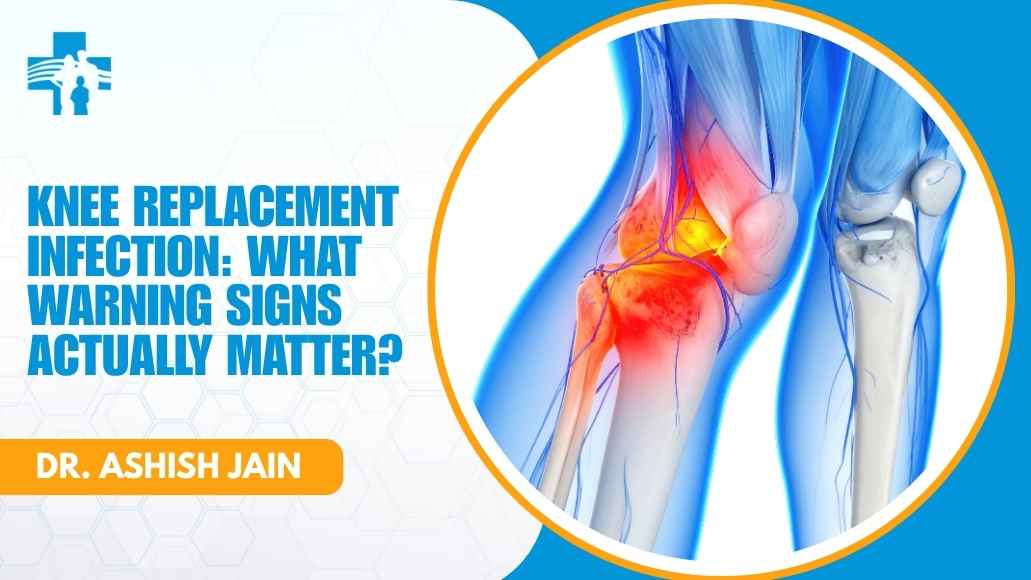
Knee replacement infection is uncommon, affecting roughly 1 to 2 in 100 patients, but knowing the real warning signs matters because catching it early is what actually protects the joint. The tricky part is that infection doesn’t always look the way people expect. Fever is no longer considered a reliable sign on its own, and some patients present with nothing more than persistent stiffness or a dull ache rather than dramatic symptoms. Understanding Knee Replacement Infection Signs properly means knowing what to actually watch for, not waiting for textbook symptoms that may never show up.
Dr. Ashish Jain, practising at Max Super Specialty Hospital, Shalimar Bagh, builds infection awareness directly into post-surgical follow-up, since early recognition is what keeps a treatable infection from becoming a serious complication.
What Warning Signs Actually Matter
Signs worth taking seriously:
● Increasing pain that doesn’t improve or worsens after the first few weeks
● Redness that spreads rather than gradually fading
● Warmth around the joint that feels more intense than typical post-surgical warmth
● Drainage from the incision that continues, increases, or changes colour
● Persistent stiffness or a dull ache, even without dramatic pain
Fever is no longer considered a reliable standalone sign, some infections present with nothing more than swelling and stiffness that simply doesn’t resolve.
Meet Dr. Ashish Jain – Knee Replacement Recovery Specialist in Delhi
Patients recovering from knee replacement want a surgical team that takes subtle, easy-to-dismiss symptoms seriously, not one that only responds to obvious red flags.
Professional Highlights:
● 18 years of experience in knee joint replacement and post-surgical care
● Pioneer in minimally invasive joint replacement techniques in India
● Practice based at Max Super Specialty Hospital, Shalimar Bagh, and Max PPA, Pitampura
● Structured post-operative monitoring built into every recovery plan
Patients noticing any unusual symptoms can reach the clinic directly via WhatsApp rather than waiting for a scheduled follow-up.
Why Infections Are Hard to Catch Early
1. Symptoms Vary Widely
Some patients have obvious redness and drainage, others only a persistent dull ache.
2. Timing Isn’t Always Immediate
Infections can appear months after surgery, not just in the first few weeks.
3. Some Swelling Is Normal
Mild redness or warmth is expected for up to a year after surgery, which can mask early warning signs.
4. Bacteria Can Hide From the Immune System
Once bacteria settle on the implant surface, the body’s immune response struggles to reach them effectively.
Why Choose This Team for Post-Surgical Monitoring?
Key advantages:
● Structured follow-up that takes subtle symptoms seriously
● Direct WhatsApp access for concerns between scheduled visits
● 18 years of experience recognising both obvious and subtle complications
● Prompt evaluation rather than a wait-and-see approach
A surgical team that responds quickly to a vague symptom, not just an obvious one, is what actually protects a knee replacement long-term.
When to Contact Your Surgeon Immediately
Reach out promptly if you notice:
● Pain that increases instead of gradually improving
● Any drainage that continues beyond the first week or changes in colour
● Sudden difficulty bearing weight on the operated leg
● Redness that spreads rather than staying localised
Same-day contact is always the right call when a symptom is new, worsening, or simply doesn’t fit the expected recovery pattern.
Step-by-Step Infection Evaluation
1. Symptom Assessment
Your specific symptoms and timeline are reviewed against expected recovery patterns.
2. Physical Examination
The joint is directly examined for redness, warmth, swelling, and drainage.
3. Diagnostic Testing
Blood work and, if needed, joint fluid analysis confirm whether infection is present.
4. Treatment Planning
Depending on findings, antibiotics, further intervention, or monitoring is recommended.
5. Close Follow-Up
Progress is tracked closely until the concern is fully resolved.
Benefits of Early Infection Recognition
✔ Significantly improves the chances of successfully treating the infection
✔ Reduces the risk of needing more extensive revision surgery later
✔ Protects the longevity of the knee implant
✔ Prevents a localised issue from spreading further
✔ Gives patients confidence in knowing what’s actually normal versus concerning
Infections caught within the first few weeks of symptoms appearing are generally far easier to treat than those left to progress.
What Normal Recovery Actually Looks Like
For comparison, expected recovery includes:
● Some swelling and mild warmth for up to a year, gradually improving
● Discomfort that steadily decreases week over week, not worsens
● Minimal, clear drainage in the first few days that stops on its own
● No new redness appearing after the initial healing period
Knowing what normal recovery looks like makes it far easier to recognise when something has genuinely changed.
Why Delhi Patients Trust This Team for Post-Surgical Care
● 18 years of experience recognising both common and subtle complications
● Direct WhatsApp access at wa.me/9599949945 for urgent concerns
● Structured follow-up built into every recovery plan
● Practice based at Max Super Specialty Hospital, Shalimar Bagh
● A track record of prompt, thorough evaluation when symptoms arise
Patients who know what to actually watch for, and who have quick access to their surgical team, catch problems earlier and recover with far more confidence.
Conclusion
Knee replacement infection is uncommon, but knowing the real warning signs, not just fever, is what actually protects the joint. Dr. Ashish Jain’s team builds this awareness directly into post-surgical care, responding promptly to both obvious and subtle symptoms.
For questions about your recovery, email DrAshishJRobotics@gmail.com or call +91-97170 35556. Follow patient updates on Instagram and YouTube.
Book your consultation with Dr. Ashish Jain here.
FAQs
Is fever always a sign of knee replacement infection?
No, fever is no longer considered a reliable standalone sign. Some infections present only with persistent swelling, warmth, or stiffness without any fever.
How common is infection after knee replacement?
Infection is uncommon, affecting roughly 1 to 2 in 100 knee replacement patients, with about half of cases appearing within the first six months.
What’s normal swelling versus a warning sign?
Mild swelling or warmth can be normal for up to a year after surgery, but pain or swelling that worsens instead of gradually improving needs evaluation.
Can knee replacement infection happen months after surgery?
Yes, infections can appear well after the initial recovery period, not just in the first few weeks, which is why ongoing awareness matters.
What should I do if I notice a possible infection sign?
Contact your surgical team the same day rather than waiting for a scheduled visit, since early evaluation significantly improves treatment success.