
Overview
Knee pain that’s concentrated on one side, usually the inner side, often gets treated as an early sign that total knee replacement is inevitable. That’s not necessarily true. When damage is genuinely limited to one part of the joint, replacing the entire knee can actually be more surgery than the situation calls for. Understanding Partial Knee Replacement in Delhi as a real option, not a lesser version of total replacement, changes how this decision should actually be made.
Dr. Ashish Jain evaluates one-sided knee pain carefully at Max Super Specialty Hospital in Shalimar Bagh before recommending whether partial or total replacement is genuinely the right fit.
What Is Unicompartmental (Partial) Knee Replacement?
The core idea behind the procedure:
● The knee joint has three compartments, and damage often affects only one, most commonly the inner side
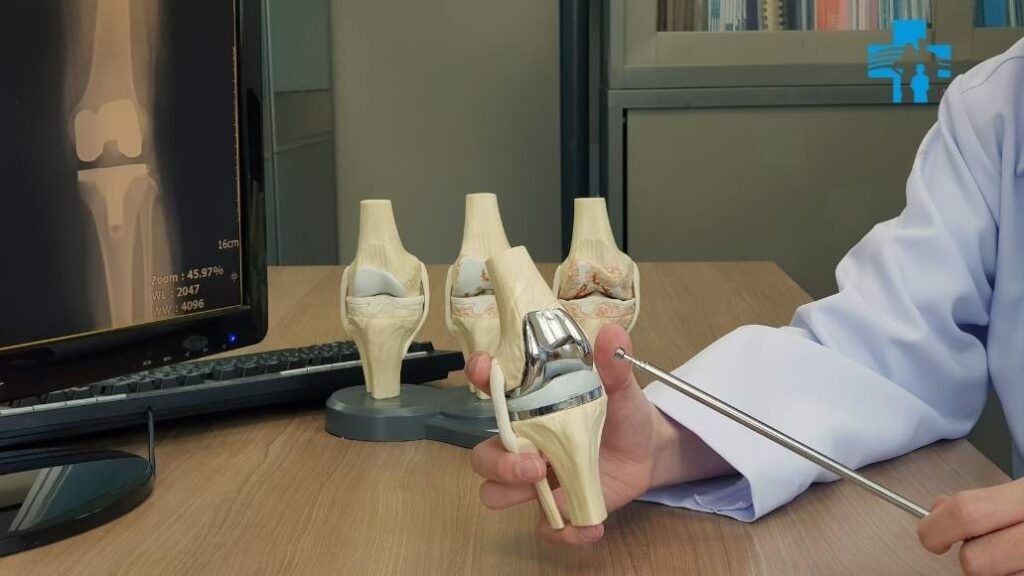
● Unicompartmental replacement resurfaces only the damaged compartment, leaving healthy bone and ligaments untouched
● It’s a genuinely different procedure from total knee replacement, not a smaller version of the same surgery
● Not every patient qualifies. It depends entirely on how localised the damage actually is
Preserving healthy parts of the joint, when the damage genuinely allows for it, is the entire premise behind why this procedure exists.
Meet Dr. Ashish Jain – Partial Knee Replacement Specialist
Patients with one-sided knee pain want a surgeon who properly assesses whether partial replacement is possible, rather than defaulting to total replacement.
Professional Highlights:
● 18 years of experience in knee joint replacement, including unicompartmental procedures
● Pioneer in minimally invasive joint replacement techniques in India
● MBBS from Kasturba Medical College, Manipal
● Practising at Max Super Specialty Hospital, Shalimar Bagh, and Max PPA, Pitampura
Patients unsure whether their symptoms fit a partial replacement case can send details directly via WhatsApp before scheduling an in-person evaluation.
How Doctors Decide Between Partial and Total Replacement
1. Location of the Damage
Imaging confirms whether the wear is genuinely confined to one compartment or has spread across the joint.
2. Ligament Condition
Partial replacement requires healthy surrounding ligaments, since they continue supporting the joint after surgery.
3. Patient Activity Levels
Some active patients benefit from the more natural movement partial replacement tends to preserve.
4. Age and Bone Quality
These factors influence long-term outcomes and are reviewed alongside imaging before a recommendation is made.
Why Choose Dr. Ashish Jain for Partial Knee Replacement?
Key advantages:
● Careful evaluation of whether damage is genuinely limited to one compartment
● 18 years of experience distinguishing appropriate candidates for partial versus total replacement
● Access to computer-assisted precision for accurate implant placement
● A rehabilitation program supporting faster return to normal movement
A surgeon willing to recommend the smaller procedure, when it’s genuinely the right fit, is exactly the kind of judgment worth seeking out.
Signs Your Knee Pain Might Fit a Partial Replacement Case
Consider an evaluation if:
● Your pain is clearly concentrated on the inner or outer side of the knee, not throughout
● X-rays have shown wear limited to one part of the joint
● You’re relatively active and want to preserve natural knee movement
● You’ve been told you need knee replacement but want a second opinion on whether it needs to be total
One-sided knee pain deserves a proper look at whether the damage is actually confined, not an automatic assumption that the whole joint needs replacing.
Step-by-Step Evaluation and Surgery Journey
1. Initial Consultation and Imaging
Detailed imaging determines exactly where the joint damage is located.
2. Candidacy Assessment
Ligament health, damage location, and activity level are all reviewed together.
3. Procedure Recommendation
A clear explanation of whether partial or total replacement is the appropriate path.
4. Surgery
If partial replacement is suitable, only the damaged compartment is resurfaced.
5. Rehabilitation
A tailored recovery plan begins soon after, often shorter than total replacement recovery.
Benefits of Partial Knee Replacement Where Suitable
✔ Preserves healthy bone, cartilage, and ligaments in the rest of the joint
✔ Generally involves a smaller incision and less tissue disruption
✔ Often allows for a faster return to normal activity
✔ Tends to feel more like a natural knee to patients afterward
✔ Can be converted to total replacement later if needed
When damage is genuinely limited to one part of the knee, partial replacement offers real advantages over going straight to total replacement.
Recovery After Partial Knee Replacement
What recovery typically looks like:
● Physiotherapy beginning within days of surgery
● Many patients walking with support within 24 to 48 hours
● Gradual increase in activity over the following weeks
● Full recovery often faster than with total knee replacement
Because less of the joint is involved, recovery from partial replacement is frequently quicker than patients expect.
Why Delhi Patients Trust Dr. Ashish Jain for Partial Knee Replacement
● 18 years of experience distinguishing between partial and total replacement candidates
● Practice based at Max Super Specialty Hospital, Shalimar Bagh
● Access to computer-assisted precision for accurate partial resurfacing
● Direct communication available via WhatsApp for pre-consultation questions
● A rehabilitation team supporting a faster, smoother recovery
Choosing the right procedure, not just the more common one, is what genuinely protects long-term knee health.
Conclusion
One-sided knee pain doesn’t automatically mean total knee replacement is the only path forward. When damage is genuinely confined to a single compartment, partial replacement offers a smaller, often faster-recovering alternative. Dr. Ashish Jain evaluates each case carefully to determine which procedure actually fits.
For questions about partial knee replacement, email DrAshishJRobotics@gmail.com or call +91-97170 35556. Follow patient recovery stories on Instagram and YouTube.
Book your knee evaluation with Dr. Ashish Jain here.
FAQs
Does one-sided knee pain always mean I need total knee replacement?
No. If damage is confined to one compartment of the knee, partial knee replacement may be a suitable alternative to total replacement.
What is unicompartmental knee replacement?
It’s a procedure that resurfaces only the damaged part of the knee joint, leaving healthy bone, cartilage, and ligaments untouched.
How is recovery different for partial knee replacement?
Recovery is generally faster than total knee replacement, since less of the joint is involved. Many patients walk with support within 24 to 48 hours.
Who is not a good candidate for partial knee replacement?
Patients with damage spread across multiple compartments, weak surrounding ligaments, or inflammatory arthritis are usually not suitable candidates.
Can partial knee replacement be converted to total replacement later?
Yes, if the rest of the joint deteriorates over time, partial replacement can generally be converted to total knee replacement in a later procedure.