
Overview
Minimally invasive is one of those terms that appears on clinic websites and in patient literature without always being explained clearly. It sounds better than the alternative. It implies less disruption, faster recovery, and less pain. All of that is broadly true. But what minimally invasive knee replacement actually involves technically, how it differs from conventional approaches, and what it means for the patient’s specific experience is worth understanding clearly before making a decision.
Dr Ashish Jain is a pioneer in minimally invasive joint replacement techniques in Delhi with 18 years of experience at Max Super Speciality Hospital, Shalimar Bagh. He has been a mentor for other practicing surgeons in these techniques, which reflects the depth of his specific expertise in this area.
What Conventional Knee Replacement Looks Like
To understand what minimally invasive means, it helps to understand what it replaced. Conventional total knee replacement used a long incision, typically 8 to 12 inches, along the front of the knee. The quadriceps tendon was divided to access the joint, the kneecap was displaced significantly, and the extent of muscle and soft tissue disruption was substantial.
This approach works. Outcomes from conventional knee replacement are well established and good. But the tissue trauma involved means a longer recovery. More swelling. More post-operative pain. A longer period before the muscles around the joint recover enough function to support normal walking.
What Minimally Invasive Knee Replacement Changes
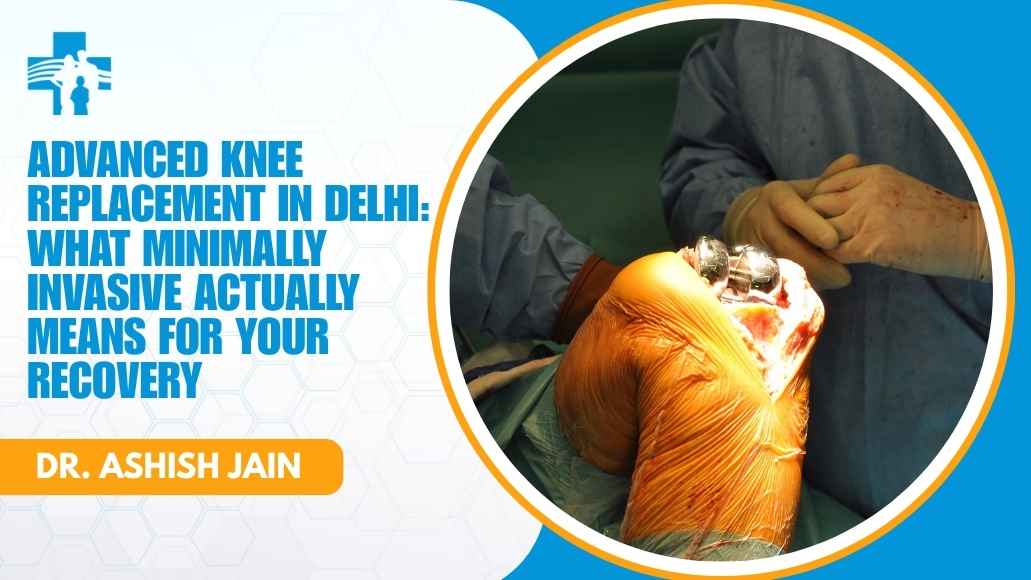
Minimally invasive technique uses a significantly shorter incision, typically 3 to 5 inches. More importantly, the approach avoids cutting through the quadriceps muscle entirely in most cases. Instead, the joint is accessed through a smaller window that works around the muscle rather than through it.
The kneecap is displaced rather than everted, meaning turned outward, which is the movement that causes significant tissue disruption in conventional surgery.
The practical consequences of this are:
• Less blood loss during surgery
• Reduced post-operative swelling and bruising
• Less pain in the early recovery period
• Earlier mobilisation because the muscles have not been cut through
• Shorter hospital stay in many cases
• Faster return to light daily activities
These are not trivial differences. For a patient’s daily experience of recovery, particularly in the first two to four weeks, they are significant.
The Technical Demands of Minimally Invasive Surgery
There is an important caveat. Minimally invasive knee replacement is technically more demanding than the conventional technique. The smaller working space requires more precise surgical skill and more refined instrumentation to achieve the same implant positioning accuracy. A surgeon who has not developed specific expertise in this technique cannot simply apply it to a conventional skill set and expect the same results.
This is why the surgeon performing minimally invasive knee replacement matters as much as the technique itself. Dr Ashish Jain’s role as a mentor for other surgeons in minimally invasive techniques reflects the level of expertise this approach requires and his established proficiency in it.
How Computer Assistance Enhances Minimally Invasive Surgery
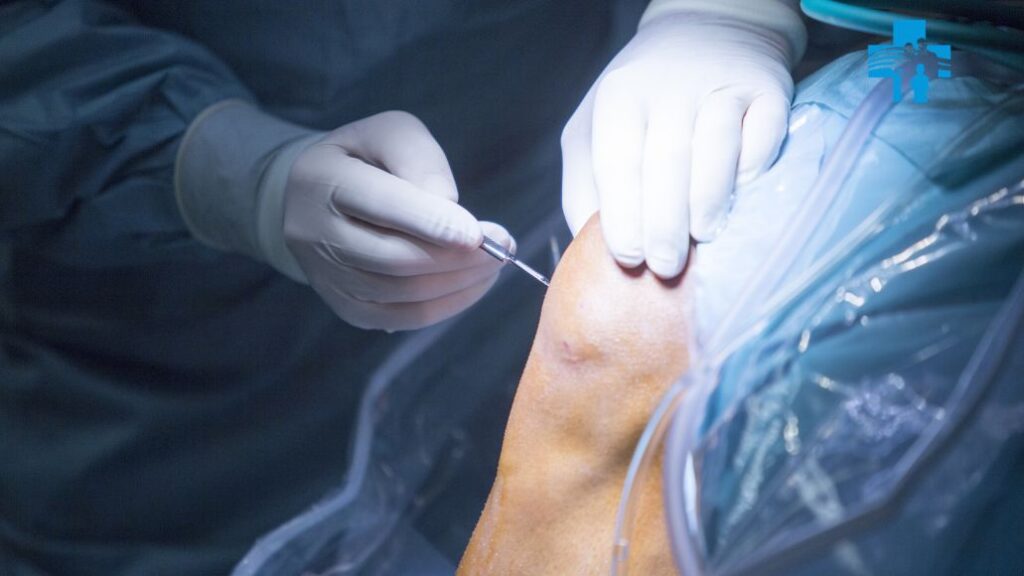
Working through a smaller incision with less visibility of the joint makes implant alignment more challenging. Computer-assisted surgery addresses this by providing real-time navigation data that compensates for the reduced direct visualisation. The surgeon maintains full control while the navigation system ensures the implant placement plan is executed accurately despite the smaller working window.
This combination of minimally invasive technique and computer assistance is what produces the best outcomes across both the surgical precision dimension and the recovery experience dimension simultaneously.
What Patients Actually Experience Differently
Much of this improved experience comes down to the precision that computer-assisted surgery adds to the minimally invasive approach.
The most significant practical difference for patients is in the first two to four weeks of recovery. The pain level is lower. The swelling is less dramatic. Getting the leg moving earlier is easier because the muscles were not cut through. Walking with a frame on day one or two after surgery happens more readily.
By week six, the difference between minimally invasive and conventional recovery is less marked because tissue healing has progressed significantly in both cases. The advantage is primarily in the early and most uncomfortable phase of recovery.
For elderly patients, this matters enormously. A less traumatic early recovery reduces the period of dependence, maintains better hydration and nutrition, and reduces the risk of complications associated with immobility and post-operative deconditioning.
Who Minimally Invasive Surgery Is and Is Not Appropriate For
Most patients undergoing primary knee replacement are candidates for a minimally invasive technique when the surgeon is trained and experienced in it. Cases involving significant deformity, complex bone anatomy, or revision surgery may require a larger exposure to achieve the necessary access and accuracy.
Dr Ashish Jain assesses each patient’s anatomy and clinical situation before confirming which approach is most appropriate. The recommendation is based on what will produce the best outcome for that specific patient rather than a blanket preference for the smallest possible incision in every case.
Conclusion
Minimally invasive knee replacement in Delhi is not just a marketing term. The technical differences from conventional surgery produce real and meaningful improvements in the early recovery experience. The outcomes at six months are comparable to those of conventional surgery when done well. The path to getting there is significantly more comfortable. For patients choosing where to have their knee replaced, a surgeon’s specific expertise in minimally invasive technique and their volume of experience with it is as important a factor as the technology available at the facility.
Frequently Asked Questions
Q. Is minimally invasive knee replacement suitable for all patients in Delhi?
Most primary knee replacement patients are candidates. Cases with significant deformity, previous surgery, or complex anatomy may require a conventional approach. Dr Ashish Jain assesses suitability at the consultation.
Q. How much shorter is recovery with minimally invasive knee replacement?
The most significant difference is in the first two to four weeks. Most patients experience earlier mobilisation, less swelling, and reduced pain compared to the conventional technique. The full recovery timeline is broadly similar at three to six months.
Q. Does minimally invasive surgery mean smaller scars?
Yes. The incision is significantly shorter than conventional surgery, typically 3 to 5 inches versus 8 to 12 inches. The scar is less visible, and the wound heals more quickly.
Q. What is the success rate of minimally invasive knee replacement surgery?
In experienced hands, the outcomes are comparable to or better than the conventional technique for suitable patients. Implant survival rates at 10 to 15 years are consistent with the established outcomes for total knee replacement generally.
CTA