
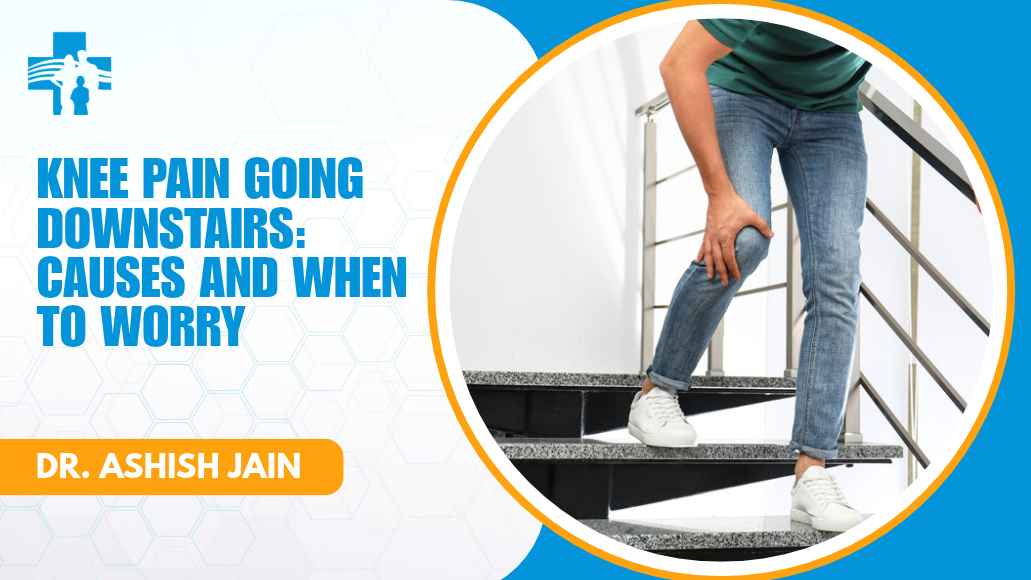
Knee pain going downstairs is often caused by irritation around the kneecap (patellofemoral pain or “runner’s knee”), but it can also come from arthritis, a meniscus tear or tendon problems. Going down stairs puts a large load through the knee, which is why it hurts there first. Pain that lasts more than a few weeks, comes with swelling, locking or giving way, or follows an injury should be checked by an orthopaedic doctor. You can book an appointment here.
Overview
Here’s a funny thing about stairs. Nobody thinks about them until their knees start to. Then suddenly you notice every flight. You hold the railing. You go down sideways, one step at a time, like a toddler. You send the youngest person in the family to fetch things from the first floor. And you start choosing restaurants based on whether they’re on the ground floor.
Going up the stairs may feel fine, yet coming down hurts. That’s not random. When you step down, your thigh muscles work hard to lower you under control, and your knee takes several times your body weight with each step. If something in the joint is irritated, worn or injured, descending is usually where it shows up first.
This guide explains why stairs, especially going downstairs, trigger knee pain, the common causes, how to work out which one might be yours, what you can do at home, when to see a doctor and what treatment can look like. Dr. Ashish Jain is a joint replacement surgeon at Max Super Speciality Hospital, Shalimar Bagh, who sees many patients with knee pain. This is general information, not a diagnosis.
Why Do Stairs Make Knees Hurt?
In plain words
● Going downstairs, your thigh muscles lengthen while holding your weight, which loads the front of the knee
● The kneecap presses against the thigh bone more as the knee bends
● If cartilage is worn, inflamed or injured, that pressure hurts
● Weak thigh and hip muscles can’t absorb the shock, so the joint takes more of it
● Stairs are the same movement repeated again and again, so small problems show up fast
Stairs are like a stress test for your knee. If something’s off, they’ll find it.
Meet Dr. Ashish Jain
Dr. Ashish Jain is a Joint Replacement Surgeon. He holds an MBBS and MS (Orthopaedics) from Kasturba Medical College, Manipal, and is a Fellow in Computer Assisted Knee Replacement Surgery (Hamburg, Germany). He is associated with Max Super Speciality Hospital, Shalimar Bagh and Max PPA Pitampura, and his listed memberships include the Delhi Orthopaedic Association, Indian Orthopaedic Association, Indian Association of Arthroplasty and the Indian Society of Hip and Knee Surgeons.
Professional Highlights
● Joint replacement surgeon who also advises on arthritis and other knee problems
● Fellowship training in computer assisted knee replacement
● Treatment for arthritis and physiotherapy listed among services
● Based at Max Super Speciality Hospital, Shalimar Bagh, New Delhi
Not sure why your knee hurts on stairs? Message the clinic on WhatsApp with your symptoms and reports.
Common Causes of Knee Pain Going Downstairs
1. Patellofemoral Pain (Runner’s Knee)
Pain around or behind the kneecap, often a dull ache at the front that can turn sharp on stairs, squatting or standing up after sitting. Medical centres such as Cleveland Clinic note it’s common in runners, jumpers, people in physical jobs and adults in their 20s to 40s, and that weak or tight thigh muscles are a frequent factor. Most people recover within a month or two with the right exercises and activity changes.
2. Knee Osteoarthritis
Wear of the cartilage is a very common reason for stairs pain, especially after 40. You might notice stiffness after sitting, swelling after busy days, grinding or creaking and pain when stepping down. Read our guide to knee osteoarthritis treatment in Delhi to understand the stages.
3. Meniscus Tear
The meniscus is the cartilage cushion inside the knee. A tear can cause pain on twisting, a catching or locking feeling and pain on deep bending or stairs. It can follow an injury, or occur gradually with age. For more on the meniscus, see our post on meniscal replacement, when is it actually needed.
4. Tendon Irritation
The patellar tendon (below the kneecap) or quadriceps tendon (above it) can get inflamed from overuse. Pain is usually felt just below or above the kneecap and worse with jumping, stairs or squatting.
5. Ligament Problems
Old or new ligament injuries can cause pain and a feeling that the knee might give way on stairs.
6. Bursitis and Fat Pad Irritation
Inflammation of small fluid-filled sacs or the fat pad behind the kneecap can cause pain at the front of the knee, especially with kneeling or going down stairs.
7. Other Causes
Hip problems, back problems and referred pain can sometimes show up as knee pain. Arthritis types such as gout or rheumatoid arthritis may cause swelling and pain that look similar, so a proper assessment matters.
Which Cause Might It Be? Clues to Notice
| What you notice | A possible clue |
| Pain at the front, around or behind the kneecap, worse after long sitting | Patellofemoral pain |
| Stiffness, swelling, creaking, worse after activity, age 40+ | Osteoarthritis |
| Catching, locking, pain on twisting | Meniscus tear |
| Pain just below or above the kneecap after sport | Tendon irritation |
| Feeling of giving way or instability | Ligament problem |
| Sudden swelling, redness, warmth, fever | Possible infection or inflammatory arthritis, which needs urgent attention |
These are only clues. Many knees have more than one problem at once, and a doctor’s examination, with an X-ray or MRI if needed, tells you what’s going on.
What Can You Do at Home?
If there’s no injury or warning sign, simple steps can help for a couple of weeks.
Usually helpful
● Reduce the load. Take stairs slowly, use the railing and avoid carrying heavy loads up and down
● Lead with the stronger leg going up, and the weaker leg going down
● Strengthen your thighs and hips with gentle exercises, ideally taught by a physiotherapist
● Maintain a healthy weight, since extra weight multiplies the load on stairs
● Use supportive, cushioned footwear
● Apply a cold pack for swelling after activity, or heat for stiffness before activity
● Take short breaks if you’ve been sitting long, and move your knees
Usually best to avoid
● Deep squats, jumping and long runs while the knee is irritated
● Sitting cross-legged or kneeling for long periods if they hurt
● Pushing through sharp pain
● Taking painkillers daily for weeks without a diagnosis
● Using any strange heating pastes, oils or mixes without knowing their contents
● Ignoring night pain or swelling
If you’ve noticed stairs pain after an injury or surgery, or you’re recovering from a knee replacement, ask your doctor before starting any new exercise. Our post on when you can walk without a cane after surgery covers recovery stages.
When Should You Worry? Red Flags
See a doctor soon if
● Pain lasts more than a few weeks or keeps returning
● Your knee swells, especially suddenly
● It feels like it locks, catches or gives way
● You can’t fully straighten or bend it
● There’s a popping sound with pain after an injury
● Pain wakes you at night or is present at rest
● You notice a visible deformity or bowing of the leg
● Walking distance keeps shrinking
● You have diabetes or take blood thinners, which can complicate things
Go to an emergency department if
● The knee is red, hot and very painful, with fever or you feel generally unwell
● You can’t put any weight on the leg after an injury
● The leg is swollen, painful and warm in the calf, which could be a blood clot
● Your knee looks obviously deformed after a fall
How Is It Diagnosed?
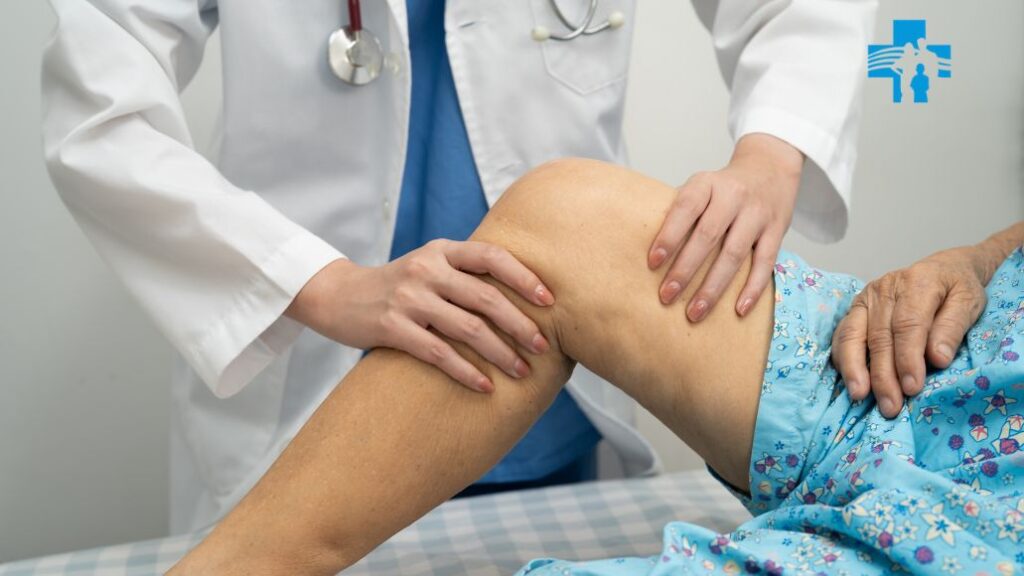
A doctor will take your history, check how your knee looks, moves and feels, test the ligaments and meniscus and watch how you walk. An X-ray can show arthritis changes and alignment. An MRI is used when soft tissue problems like a meniscus or ligament injury are suspected. Blood tests may be advised if inflammatory arthritis or gout is possible.
Treatment Options
Treatment depends on the cause.
● Patellofemoral pain: Physiotherapy to strengthen the thighs and hips, activity changes and sometimes taping or bracing
● Osteoarthritis: Weight management, exercise, pain relief, injections in some cases and surgery in advanced disease. See our post on whether knee injections can delay surgery
● Meniscus tear: Rest, physiotherapy or keyhole surgery for certain tears
● Tendon problems: Load management and rehab exercises
● Advanced arthritis: If pain is severe and other treatments haven’t helped, surgery such as partial or total knee replacement may be discussed
If you’ve been told you may need surgery, our guide to when knee replacement is actually necessary can help you understand the thinking.
Why Choose Dr. Ashish Jain for Knee Pain?
Key advantages
● A joint replacement surgeon who also advises on non-surgical care
● Careful assessment to work out the real cause
● Partial and total knee replacement discussed only when appropriate
● Services at Max Super Speciality Hospital, Shalimar Bagh and Max PPA Pitampura
● Clear information on cost factors if surgery is ever needed
Explore knee joint replacement services, or book an appointment.
What Are the Benefits of Getting Stairs Pain Checked?
✔ A clear answer on what’s causing the pain
✔ A plan before the problem gets worse
✔ Protection for the cartilage you have
✔ Easier stairs, and an easier day
✔ Less guesswork with painkillers and home remedies
Staying Informed
For general bone and joint tips, follow Dr. Jain on Instagram and YouTube. Results vary, and no outcome can be guaranteed.
Why Do Delhi Patients Choose Dr. Ashish Jain?
● A surgeon focused on knee and hip joint replacement
● Honest advice on surgical and non-surgical options
● Easy contact via phone, WhatsApp or the contact page
● Updates on Instagram
● A convenient hospital base at Shalimar Bagh
Conclusion
Knee pain on the stairs isn’t something to laugh off or simply “live with”. It’s usually your knee telling you something specific. Often it’s manageable with strengthening, smart habits and the right diagnosis, and sometimes it points to arthritis or an injury that needs proper care. Watch for the warning signs, don’t ignore night pain or swelling and get checked if it lasts more than a few weeks. When you’d like a clear answer, Dr. Ashish Jain’s team is here to help.
Contact Dr. Ashish Jain
Email: DrAshishJRobotics@gmail.com
Phone: +91 97170 35556
WhatsApp: Message the clinic
Follow on: Instagram | YouTube
Book your knee consultation with Dr. Ashish Jain here
FAQs
Why does my knee hurt going downstairs but not upstairs?
Going down puts more controlled load through the knee, especially the kneecap joint. If cartilage or tendons are irritated, descending often triggers pain first.
Is knee pain on stairs a sign of arthritis?
It can be, especially after 40, but patellofemoral pain, meniscus tears and tendon problems can cause it too. An examination and X-ray help.
What is runner’s knee?
A pain around or behind the kneecap, often from overload, weak muscles or poor tracking. It commonly worsens with stairs and squatting and usually settles with rehab.
Should I avoid stairs if my knee hurts?
You don’t need to avoid them completely, but go slowly, use the railing and reduce unnecessary trips while it settles. Sudden severe pain needs a check.
When should I see a doctor for knee pain?
If it lasts more than a few weeks, comes with swelling, locking or giving way, wakes you at night or follows an injury.
Can exercises fix knee pain on stairs?
Often they help, especially for patellofemoral pain, by strengthening thigh and hip muscles. A physiotherapist can tailor them. You can contact the clinic to discuss your case.