
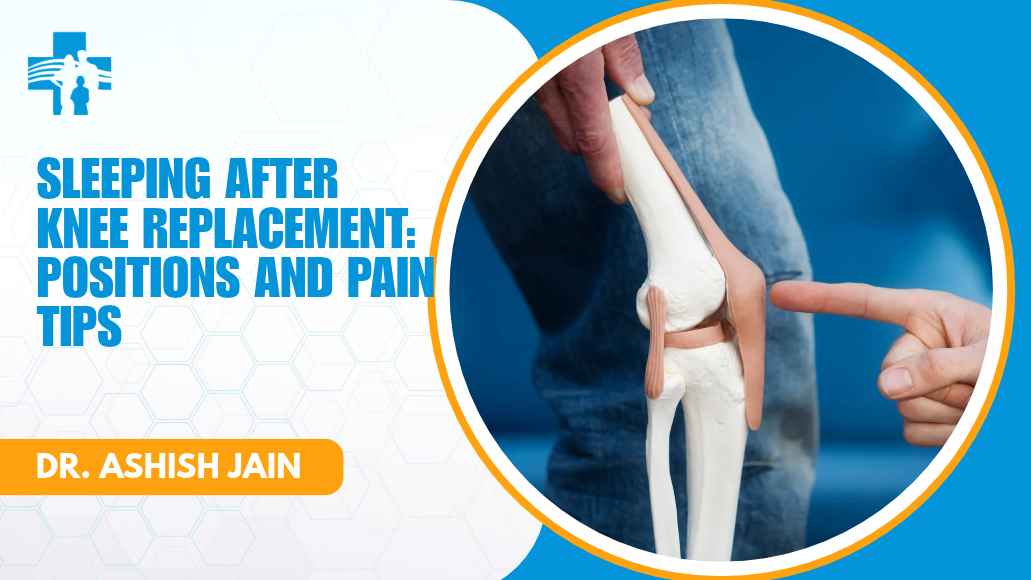
After a knee replacement, many people sleep poorly for the first weeks, mostly because of pain, swelling and difficulty getting comfortable. Lying on your back with the leg straight and supported under the calf and heel, or on your non-operated side with a pillow between your knees, is commonly advised. Many surgeons suggest avoiding a pillow directly under the knee. Always follow your own surgeon’s instructions. You can book an appointment here.
Overview
You’ve had the surgery. The operation went well. The hospital stay is over, and you’re home. And then night falls.
It’s 2 a.m., and you’re wide awake. The knee is warm and throbbing. Every position feels wrong. You try your back, then your side, then you prop a pillow under the knee because it feels natural, and a voice in your head (or the physiotherapist’s) says that isn’t a good idea. You glance at the clock. The night suddenly feels very long.
If that’s you, or if you’re preparing for surgery and dreading it, you’re not alone. Night is when many people notice their pain most. There’s no distraction, the painkillers may be wearing off and the swelling builds up from the day’s movement. This guide explains why sleep is hard after a knee replacement, which positions are generally advised, what to do about pillows, how to manage night pain and swelling, when sleep usually improves and which warning signs shouldn’t wait until morning. Dr. Ashish Jain is a joint replacement surgeon at Max Super Speciality Hospital, Shalimar Bagh. This is general information, and your own surgeon’s and physiotherapist’s instructions always take priority.
Why Is Sleep So Hard After Knee Replacement?
In plain words
● Surgical pain often feels worse at night, especially as medicines wear off
● Swelling tends to build with the day’s activity and settles slowly
● It’s hard to find a comfortable position with a stiff, bandaged or swollen knee
● Changes to routine, medicines and pain can upset your sleep cycle
● Anxiety about the new knee can keep your mind awake
It’s normal for sleep to be disturbed for a few weeks. It doesn’t mean something has gone wrong.
Meet Dr. Ashish Jain
Dr. Ashish Jain is a Joint Replacement Surgeon. He holds an MBBS and MS (Orthopaedics) from Kasturba Medical College, Manipal, and is a Fellow in Computer Assisted Knee Replacement Surgery (Hamburg, Germany). He is associated with Max Super Speciality Hospital, Shalimar Bagh and Max PPA Pitampura, and his listed memberships include the Delhi Orthopaedic Association, Indian Orthopaedic Association, Indian Association of Arthroplasty and the Indian Society of Hip and Knee Surgeons.
Professional Highlights
● Joint replacement surgeon offering total knee replacement and partial knee replacement
● Fellowship training in computer assisted knee replacement
● Physiotherapy listed among clinic services
● Based at Max Super Speciality Hospital, Shalimar Bagh, New Delhi
Struggling with nights after surgery? Message the clinic on WhatsApp for guidance.
Best Sleeping Positions After Knee Replacement
There’s no single perfect position, and your surgeon may have specific advice for you. These are the positions commonly recommended.
1. On Your Back (Most Often Advised)
● Lie flat or with your head slightly raised
● Keep the operated leg as straight as is comfortable
● Support the calf and heel with a pillow or wedge so the leg is gently raised and the knee can stay straight
● Keep your toes pointing up, not rolling outward
2. On Your Non-Operated Side
● Lie on the side of your healthy leg
● Place a pillow between your knees and along the lower legs to keep the operated leg supported and aligned
● Don’t let the operated knee drop forward onto the bed
● Many people only try this after the first week or two, and when their surgeon agrees
3. Slightly Propped Up
If lying flat feels uncomfortable, a slightly raised head and shoulders can help, as long as the leg stays supported.
What About Lying on the Operated Side?
It may be uncomfortable and unsafe early on, and it puts pressure on the incision. Ask your surgeon when it’s allowed. Sleeping on your stomach is also usually discouraged for some time, since it can pressure the wound and the knee. Confirm with your surgeon before trying either.
Whichever position you choose, try not to stay in exactly the same position for hours. Gentle shifting helps stiffness and circulation.
The Pillow Question: Under the Knee or Not?
This is the most common question, and the usual advice may surprise you.
Many surgeons and physiotherapists advise not putting a pillow directly under the operated knee. Keeping the knee propped in a bent position for long periods can make it harder to straighten fully later, and getting that full straightening back is an important goal. Instead, support the calf and heel so the knee can relax into straightness.
Pillow dos and don’ts
● Do place a pillow or wedge under your calf and heel
● Do use a pillow between your knees if you sleep on your side
● Don’t wedge a pillow directly under the knee for long periods, unless your surgeon says so
● Don’t rest on a bed that’s too soft, since sinking can twist the leg
● Do use extra pillows for comfort, but keep the leg aligned
Your physiotherapist may have a different instruction for your case, so follow that.
Managing Night Pain After Knee Surgery
Plan Your Medicines
Don’t wait for pain to become severe. Take your prescribed pain medication exactly as your surgeon or doctor has advised, and ask whether a dose before bed makes sense for you. Never double doses or add extra medicines on your own, since they can interact or cause side effects.
Use Ice and Elevation
Icing for a short time before bed can ease swelling and pain. Wrap the ice pack in a cloth and never fall asleep with it on your skin. Elevating the leg above heart level while resting can help swelling, with the knee kept straight.
Keep Moving During the Day
Rest matters, but so does moving as advised. Your physiotherapist’s exercises and short, regular walks reduce stiffness and swelling, which can make nights easier. Our guide on what you can actually do after knee replacement surgery explains what’s usual at each stage.
Make the Bedroom Safer
● Keep a night light on and the path to the bathroom clear
● Move rugs and cords out of the way
● Keep your walker or stick within reach
● Keep water, medicines (as prescribed) and your phone near the bed
● Use a firm, stable mattress if you can, and keep the bed at a height that allows safe sitting and standing
If You Wake Up Stiff or Sore
A short, slow walk with your walking aid, as your surgeon allows, can ease stiffness. Then return to bed with the leg supported.
Quiet the Mind
Sleep hygiene helps more than people expect. Keep a regular bedtime, limit caffeine in the afternoon, dim screens at night and avoid alcohol with pain medicines.
How Long Do Sleep Problems Last?
Honestly, it varies. Many people find their sleep is poor for the first weeks and improves gradually as pain and swelling settle. Some orthopaedic resources suggest that sleep quality often improves over the first few months. If you’re still struggling after that, or if pain is getting worse instead of better, talk to your surgeon. For a broader picture of timelines, see our guide on how long recovery from knee surgery really takes.
Warning Signs: Don’t Wait Until Morning
Most night discomfort is normal. But some signs need prompt medical attention. Dr. Jain’s total knee replacement page asks patients to report any redness, itching, blood clot or pus at the wound site promptly.
Call your surgeon soon if
● Redness, warmth or swelling at the wound is increasing
● There’s pus, foul-smelling discharge or the wound is opening
● Pain is getting steadily worse, not better
● You have a fever or chills
● Your calf is swollen, tender or warm, especially on one side
● Your knee suddenly becomes much more stiff, swollen or unstable
Go to an emergency department straight away if
● You have chest pain, trouble breathing or a sudden cough, which could suggest a blood clot in the lung
● You feel faint or have a racing heartbeat
● You’ve had a fall and can’t bear weight or the knee looks deformed
For more on spotting problems, read knee replacement infection, what warning signs actually matter.

Preparing Your Sleep Setup Before Surgery
A little planning before surgery helps a lot.
● Set up a bedroom on the ground floor if stairs are difficult
● Arrange pillows or a wedge for leg support
● Keep a night light, a firm chair and a walker or stick nearby
● Ask your surgeon or physiotherapist about positioning before you go in
● Talk about pain medicine timing in advance
● Consider whether a family member can stay with you for the first nights
● Look at prehab exercises before knee replacement, which can make recovery smoother
Why Choose Dr. Ashish Jain for Knee Replacement?
Key advantages
● Fellowship training in computer assisted knee replacement
● Clear guidance before and after surgery
● Both total and partial knee replacement options
● Services at Max Super Speciality Hospital, Shalimar Bagh and Max PPA Pitampura
● Information on cost factors before you decide
Learn more about knee joint replacement, or book an appointment.
What Are the Benefits of a Good Recovery Plan?
✔ Better sleep, and better healing
✔ Less pain and stiffness at night
✔ Safer movement around the house
✔ More confidence in the first weeks
✔ A smoother route to walking comfortably
Staying Informed
For general joint health updates, follow Dr. Jain on Instagram and YouTube. If you’re wondering about daily activities, our post on when you can drive again after knee surgery may help. Results vary, and no outcome can be guaranteed.
Why Do Delhi Patients Choose Dr. Ashish Jain?
● A joint replacement focus, with knee and hip expertise
● Practical advice before and after surgery
● Easy contact via phone, WhatsApp or the contact page
● Updates on Instagram
● A convenient hospital base at Shalimar Bagh
Conclusion
Sleeping after a knee replacement can be one of the toughest parts of recovery, and it does get better. Keep the leg supported and straight, avoid a pillow under the knee unless told otherwise, plan your pain medicines with your doctor, keep moving during the day and know which warning signs need a call. Be patient with the process. If nights are becoming unmanageable, or something doesn’t feel right, contact your surgeon. Dr. Ashish Jain’s team is here to guide you.
Contact Dr. Ashish Jain
Email: DrAshishJRobotics@gmail.com
Phone: +91 97170 35556
WhatsApp: Message the clinic
Follow on: Instagram | YouTube
Book your knee consultation with Dr. Ashish Jain here
FAQs
What is the best sleeping position after knee replacement?
Lying on your back with the leg straight and the calf and heel supported is commonly advised. Sleeping on your non-operated side with a pillow between the knees is another option. Follow your surgeon’s instructions.
Can I put a pillow under my knee after knee replacement?
Many surgeons advise against it, since keeping the knee bent for long periods can make straightening harder later. Support the calf and heel instead, unless your surgeon says otherwise.
Why does my knee hurt more at night after surgery?
Medicines wear off, swelling builds during the day and there are fewer distractions. This is common, but worsening pain should be reported.
How long will I have trouble sleeping after knee replacement?
Many people sleep poorly for the first weeks, improving over the first few months. It varies from person to person.
Can I sleep on my side after knee replacement?
Often yes, on the non-operated side with a pillow between the knees, once your surgeon agrees. Avoid lying on the operated side until allowed.
When should I call my surgeon about night pain?
If pain is worsening, with fever, wound redness, pus, a swollen calf or breathing difficulty. You can contact the clinic for guidance.