
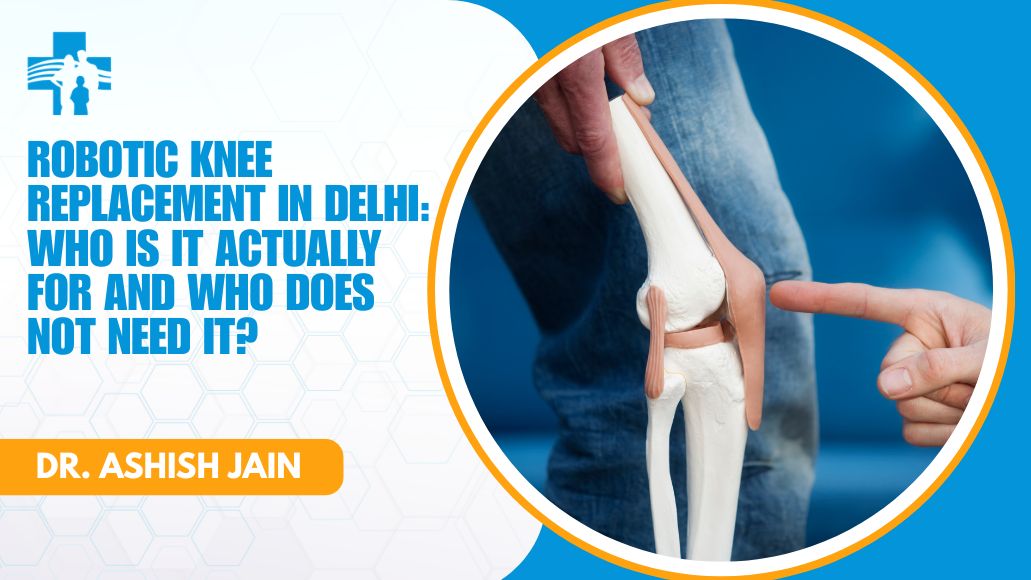
Overview
Robotic knee replacement gets a lot of attention. The technology is genuinely impressive, the marketing around it is significant, and most patients who encounter it during their research are left with the impression that it is categorically superior and that anyone who does not use it is somehow doing the procedure the old way.
The reality is more nuanced. Robotic-assisted surgery does produce measurably better outcomes in specific areas and for specific patient profiles. But it is not the right choice for every knee replacement case, and being clear about who benefits most is more honest and more useful than simply marketing it as the best option for everyone.
Dr Ashish Jain performs computer-assisted knee replacement surgery at Max Super Speciality Hospital, Shalimar Bagh. His approach to recommending it is based on the clinical picture rather than a default preference for the most advanced option regardless of necessity.
What Robotic-Assisted Surgery Actually Does
The robotic system does not perform the surgery. Dr Ashish Jain does. The robotic arm provides real-time feedback, boundary control, and precision guidance that makes implant placement more consistently accurate than manual technique alone.
Before surgery, a 3D model of the patient’s specific knee anatomy is created from imaging. The surgeon plans the procedure virtually, mapping exactly how much bone needs to be removed and where the implant should be positioned for optimal alignment with that individual’s anatomy. During surgery, the robotic arm resists movement outside the planned safe zone, ensuring the execution matches the plan precisely.
The result is implant placement accuracy that reduces variation compared to manual technique. This consistency is where the clinical benefit comes from.
Where Robotic-Assisted Surgery Produces Better Outcomes
Implant alignment. Even small deviations from optimal implant alignment affect how naturally the knee moves and how evenly load is distributed across the joint surfaces over time. Consistently better alignment means more natural movement and reduced uneven wear.
Bone preservation. Precise pre-operative planning and guided bone cuts mean less healthy bone is removed than in some conventional approaches. For younger patients who may need revision surgery decades later, more remaining bone makes that future surgery significantly more manageable.
Soft tissue protection. The boundary control system reduces the likelihood of unintended damage to surrounding ligaments and tissue during bone preparation. Less tissue trauma translates into less post-operative swelling and earlier mobilisation for many patients.
Who Benefits Most From Robotic-Assisted Knee Replacement
Younger patients. For patients under 65 undergoing knee replacement, the long-term implications of implant positioning matter more because they are expected to live with the implant for a longer period. Better alignment from robotic assistance extends implant life and reduces the likelihood of needing revision surgery.
Patients with complex anatomy. Cases involving significant deformity, unusual bone anatomy, or previous surgery around the knee benefit from the precision planning that robotic systems enable. Manual technique has less flexibility to account for individual anatomical variation.
Patients prioritising quality of movement. The feel of a robotic-assisted replacement, in terms of how naturally the knee moves, is consistently reported as slightly better in patient-reported outcome studies. For patients who want the most natural-feeling result possible, robotic assistance adds value.
Cases where bone preservation is a priority. Younger patients or those with specific bone quality considerations where minimising bone removal matters for future options.
Who Does Not Need Robotic-Assisted Surgery
This is the part that gets left out of most robotic surgery marketing. Conventional knee replacement performed by an experienced high-volume surgeon produces excellent outcomes for a large proportion of patients, particularly older patients, where the long-term revision risk is lower and where the incremental benefit of robotic precision matters less.
A 75-year-old patient having a primary knee replacement for severe osteoarthritis in a straightforward anatomy, operated on by a surgeon who performs hundreds of knee replacements per year using excellent technique, will achieve a very good outcome without robotic assistance. The additional cost of the robotic system is not adding proportionate value in this scenario.
Dr Ashish Jain makes this assessment at the consultation based on the patient’s age, anatomy, clinical picture, and goals rather than defaulting to robotic surgery for every case.
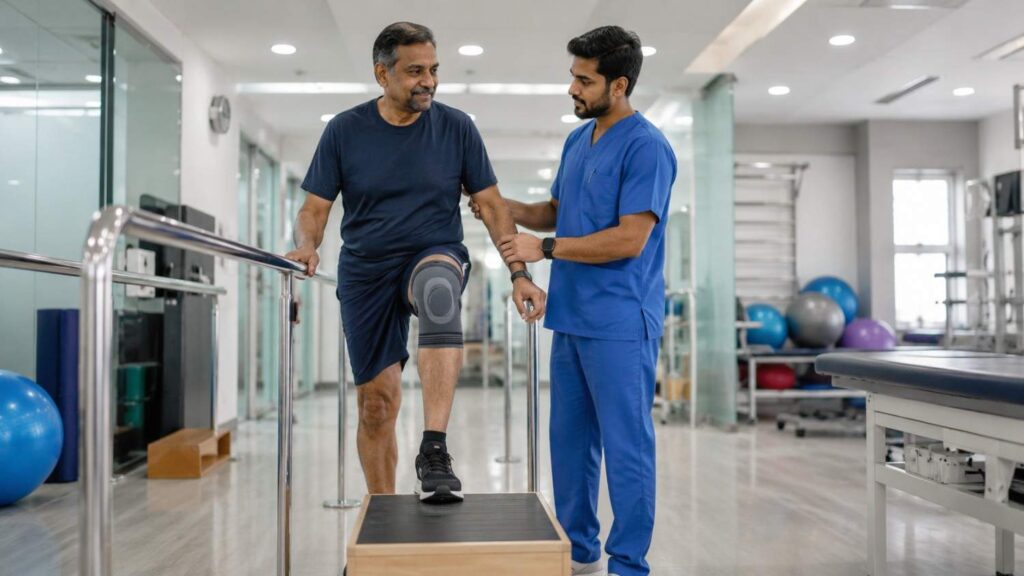
What Computer-Assisted Surgery at Dr Ashish Jain’s Practice Involves
Patients weighing up robotic assistance often review the fuller explanation of computer-assisted surgery to understand exactly how the technology guides each step.
Computer-assisted surgery at Max Shalimar Bagh uses navigation technology to provide real-time intraoperative feedback on alignment and implant positioning. The technology maps the patient’s anatomy during surgery and provides continuous guidance that ensures the implant plan is executed accurately.
The pre-operative planning process is thorough. Dr Ashish Jain reviews imaging in detail before the surgical date and plans the procedure around the individual patient’s anatomy. This planning is what makes the intraoperative guidance meaningful rather than generic.
Conclusion
Robotic knee replacement in Delhi is genuinely more precise than the conventional technique in specific measurable ways. Whether that precision makes a meaningful difference to the outcome depends on the patient’s age, anatomy, and clinical situation. It is not universally necessary, and being honest about this produces better clinical decisions than marketing it as the gold standard for everyone.
Frequently Asked Questions
Q. Is robotic knee replacement available at Max Shalimar Bagh in Delhi?
Yes. Dr Ashish Jain performs computer-assisted and robotic knee replacement at Max Super Speciality Hospital, Shalimar Bagh.
Q. How much more does robotic knee replacement cost compared to conventional surgery in Delhi?
The cost difference reflects the technology, planning process, and surgical time involved. The value of that difference depends on whether the patient’s clinical situation is one where robotic precision adds meaningful benefit. Dr Ashish Jain discusses this at the consultation.
Q. What is the recovery difference between robotic and conventional knee replacement?
Many patients experience less post-operative swelling and earlier mobilisation after robotic-assisted surgery due to reduced soft tissue disruption. The overall recovery timeline is similar, though the early stages are often more comfortable.
Q. Can I request a robotic knee replacement even if Dr Ashish Jain does not recommend it as the primary option?
Yes. The consultation is a conversation. If you want to understand why a particular recommendation is being made or want to discuss alternatives, Dr Ashish Jain explains the clinical reasoning clearly so you can make an informed decision.
CTA