
Overview
Knee replacement surgery in 2026 is a fundamentally different procedure from what it was twenty years ago. Not in the basic concept, the damaged joint is still replaced with an artificial one, but in almost every other respect. The technique, the technology, the implants, the anaesthesia, and the recovery protocol have all changed significantly.
Most patients researching knee replacement in North Delhi are working from a mental model of the procedure that is out of date. The stories from relatives who had it done a decade ago, the descriptions of long hospital stays and painful recovery, and the warnings about how difficult the rehabilitation is. Some of that was accurate then. Most of it does not describe what happens now.
Dr Ashish Jain practices at Max Super Speciality Hospital, Shalimar Bagh and Max PPA Pitampura, bringing advanced joint replacement techniques to North Delhi with 18 years of specialist experience in knee surgery.
What Has Actually Changed About Knee Replacement Technique?
The most significant change in recent years is the shift toward minimally invasive approaches. Traditional knee replacement used long incisions and required significant disruption of the muscles around the knee to access the joint. The surgery worked but recovery was slow and painful because of the soft tissue damage involved.
Minimally invasive knee replacement uses smaller incisions and a technique that works around rather than through the major muscle groups. The joint access is more controlled. Blood loss is lower. Post-operative pain is reduced. And early mobilisation, which is one of the most important factors in long-term outcome, is significantly easier when the surrounding muscles have not been cut through.
Dr Ashish Jain is a pioneer in minimally invasive joint replacement techniques in Delhi and has mentored other practising surgeons in these methods. You can read more about the knee joint replacement approach at his practice to understand what this means for patients specifically.
How Has Computer-Assisted Technology Changed Outcomes?
Implant alignment is one of the most critical determinants of how long a knee replacement lasts and how well it functions. In conventional surgery, alignment relies on mechanical guides and the surgeon’s judgment. Even experienced surgeons have natural variation in placement accuracy.
Computer-assisted surgery uses navigation technology to track instrument position in real time and provide feedback on alignment throughout the procedure. The implant goes in at the planned position consistently rather than depending on manual technique alone.
The practical outcomes of better alignment are real. The knee moves more naturally. Load is distributed more evenly across the joint surfaces. Implant wear is reduced. And the likelihood of needing revision surgery due to misalignment is significantly lower.
What Has Changed About Implants?
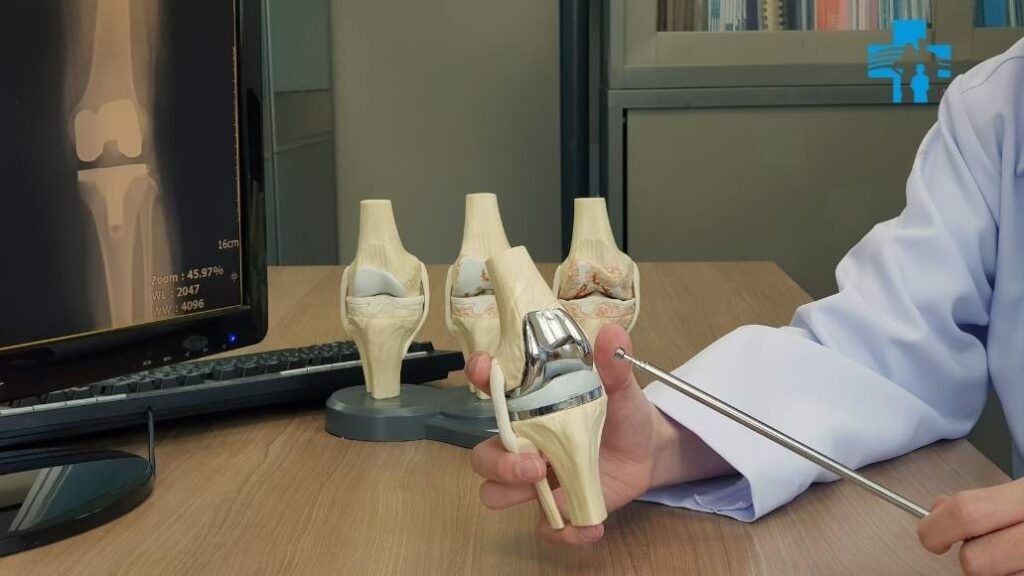
Implant materials and design have improved considerably. Modern knee implants are designed to more closely replicate the natural movement of the knee rather than simply replacing the joint surfaces with flat components.
High-flex implants allow a greater range of motion after surgery, which matters for Indian patients in particular, given daily activities that involve squatting, sitting cross-legged, and floor-level movement. Implant surfaces are engineered to reduce wear over time. And fixation techniques have improved, so the implant integrates more reliably with the bone.
The choice of implant at Max Super Speciality Hospital is made based on each patient’s anatomy, activity level, and the surgical findings. There is no single implant used for everyone.
What Has Changed About Recovery?
This is where the change is most dramatic and where the outdated mental model causes the most unnecessary anxiety.
The old approach to knee replacement recovery involved extended bed rest, slow mobilisation, and weeks before meaningful activity was possible. Current protocols are almost the opposite.
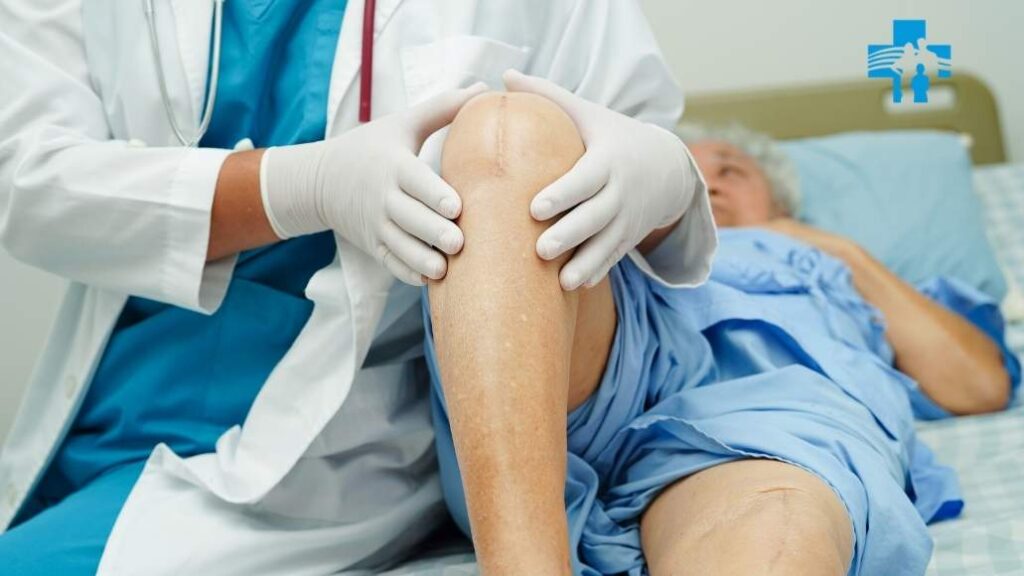
Physiotherapy begins within 24 hours of surgery at Dr Ashish Jain’s practice. Walking with support typically happens on the day after surgery. Most patients are discharged within 3 to 5 days. Return to light daily activity within 6 to 8 weeks is now standard rather than exceptional.
The reason this is possible is the combination of minimally invasive technique, better anaesthesia and pain management, and evidence-based rehabilitation protocols that prioritise early movement rather than rest. Less surgical trauma means less pain. Less pain means earlier movement is possible. Earlier movement means faster functional recovery.
What About Arthritis Treatment Without Surgery?
Not every patient who comes to Dr Ashish Jain with knee pain needs replacement surgery. For earlier-stage arthritis where the joint damage has not progressed to the point where replacement is the most appropriate option,
treatment for arthritis through medication, injections, physiotherapy, and lifestyle modification can manage symptoms effectively.
The honest assessment of where a patient sits on that spectrum is what the consultation is for. Patients in North Delhi who are experiencing knee pain and want to understand their options properly, including whether surgery is actually necessary, can book a consultation without any obligation to proceed with treatment.
Conclusion
Advanced knee replacement in North Delhi is not what it was a decade ago. The technique is less invasive, the technology is more precise, the implants are better designed, and recovery is significantly faster. If the stories you have heard about knee replacement come from someone who had it done years ago, the experience they described is largely not what patients go through now. Read our guide on robotic knee replacement in Delhi to understand the precision technology behind modern outcomes, or explore total knee replacement at Shalimar Bagh for location-specific information.
Frequently Asked Questions
Q. How soon can I walk after advanced knee replacement surgery in North Delhi?
Most patients walk with support within 24 hours of surgery. Walking without aid typically takes 4 to 6 weeks. Full functional recovery takes over 3 to 6 months with consistent physiotherapy.
Q. What is the difference between minimally invasive and conventional knee replacement?
The minimally invasive technique uses smaller incisions and works around major muscle groups rather than cutting through them. This reduces blood loss, post-operative pain, and recovery time compared to conventional open surgery.
Q. Is total knee replacement the only option for severe knee arthritis?
For some patients with damage confined to one compartment of the knee, unicompartmental or partial knee replacement is a less invasive alternative. A thorough assessment determines which approach is most appropriate.
Q. How long do modern knee implants last?
Current generation knee implants are designed to last 20 to 25 years with normal activity levels. Better alignment from computer-assisted surgery and improved implant materials contribute to longer functional life compared to older generation implants.