

When Knee Pain Starts Controlling Your Life
Knee pain can slowly change the way you live. At first, you may avoid stairs. Then walking becomes difficult. Over time, even standing up from a chair or sleeping through the night can become painful.
When medicines, injections, and physiotherapy no longer give lasting relief, it may be time to discuss advanced knee replacement surgery in Delhi with an experienced specialist.
Dr Ashish Jain is a senior knee replacement surgeon in Delhi with nearly 18 years of experience in joint replacement and advanced orthopaedic care. He practices at Max Super Speciality Hospital, Shalimar Bagh, and Max PPA, Pitampura, helping patients regain mobility with modern surgical techniques and personalised care.
What Is Advanced Knee Replacement Surgery?
Advanced knee replacement surgery is a modern approach to replacing the damaged parts of the knee joint with artificial implants designed to restore movement, reduce pain, and improve quality of life.
Today, knee replacement is not the same as it was years ago. Better surgical planning, improved implant design, computer-assisted technology, and minimally invasive techniques have made the procedure more precise and recovery more comfortable for many patients.

How Advanced Knee Replacement Is Different Today
Modern knee replacement focuses on accuracy, faster mobilisation, and long-term implant performance. The goal is not just to replace the joint, but to help the patient walk better, recover safely, and return to daily life with confidence.
- Computer navigation helps guide implant placement more accurately.
- Minimally invasive techniques can reduce tissue damage in suitable patients.
- Improved implant materials support better durability and natural movement.
- Early physiotherapy helps patients start walking sooner after surgery.
- Shorter hospital stays and better pain control make recovery more manageable.
Conditions That May Lead to Knee Replacement
Knee replacement is usually recommended when joint damage becomes severe and non-surgical care is no longer effective. Dr Ashish Jain carefully evaluates every patient before advising surgery.
- Advanced osteoarthritis with severe cartilage loss
- Rheumatoid arthritis causing joint destruction
- Post-traumatic arthritis after knee injury or fracture
- Severe knee deformity, such as bowing inward or outward
- Avascular necrosis affecting the knee joint
- Failed previous knee surgery or damaged older implant
Knee Replacement Procedures Offered by Dr Ashish Jain
Total Knee Replacement
Total knee replacement is recommended when most of the knee joint is damaged. The worn-out joint surfaces are replaced with high-quality metal and plastic components that allow smoother movement and pain relief.
Partial Knee Replacement
When only one part of the knee is damaged, partial knee replacement may be possible. This procedure preserves healthy bone and ligaments and may offer a more natural knee feel in carefully selected patients.
Computer-Assisted Knee Replacement
Computer-assisted knee replacement uses real-time navigation to help the surgeon place the implant with greater precision. Better alignment can support improved joint function and long-term implant performance.
Minimally Invasive Knee Replacement
In suitable cases, minimally invasive knee replacement uses smaller incisions and less disruption to surrounding tissues. This may help reduce discomfort and support smoother rehabilitation.
Revision Knee Replacement
Revision knee replacement is performed when a previous knee implant has failed, loosened, become infected, or worn out. It is a complex procedure that requires strong surgical experience and careful planning.
What to Expect During the Treatment Journey
Knee replacement success depends on more than the surgery itself. The process includes diagnosis, planning, hospital care, physiotherapy, and follow-up.
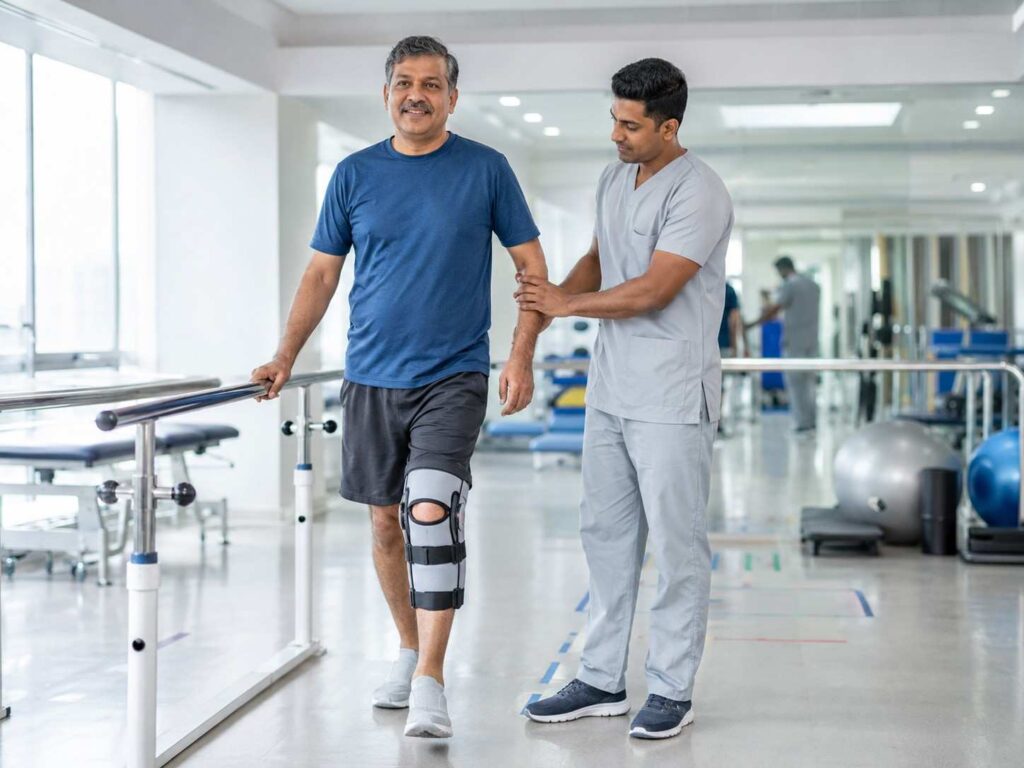
Before surgery, Dr Ashish Jain reviews imaging, checks overall health, explains implant options, and prepares a rehabilitation plan. During surgery, precision techniques are used to place the implant accurately. After surgery, physiotherapy usually starts early so the patient can begin walking with support and gradually regain strength.
Who Should Consider Knee Replacement Surgery?
You may need to consult a knee replacement surgeon in Delhi if you have severe knee pain that affects walking, climbing stairs, sleep, work, or daily activities.
- Knee pain lasting despite medicines and physiotherapy
- Stiffness that makes bending or straightening difficult
- Visible knee deformity
- Pain at rest or during sleep
- Reduced independence due to knee problems
Age alone does not decide whether someone needs surgery. The decision depends on joint damage, symptoms, activity level, and overall health.
Why Patients Choose Dr Ashish Jain for Knee Replacement in Delhi
- Nearly 18 years of focused orthopaedic and knee replacement experience
- Expertise in total, partial, revision, computer-assisted, and minimally invasive knee replacement
- Practice at Max Super Speciality Hospital, Shalimar Bagh, and Max PPA, Pitampura
- Patient-first treatment planning with honest guidance
- Emphasis on safe surgery, structured recovery, and long-term mobility
Personalised Care at Every Stage
Every patient has a different knee condition, body type, pain level, and lifestyle goal. That is why personalised planning matters. Dr Ashish Jain evaluates each patient carefully and recommends the most suitable treatment approach rather than using a one-size-fits-all plan.
The aim is clear: reduce pain, improve movement, and help patients return to a more active and independent life.
Conclusion
Advanced knee replacement surgery in Delhi can be life-changing for patients struggling with long-term knee pain and mobility loss. With modern techniques, precise implant placement, and structured rehabilitation, many patients are able to walk better and return to daily activities with confidence.
If knee pain has started limiting your life, consult Dr Ashish Jain at Max Super Speciality Hospital, Shalimar Bagh, or Max PPA, Pitampura, to understand your treatment options.
Book your consultation with Dr Ashish Jain today.
Frequently Asked Questions
Who is the best knee replacement surgeon in Delhi for advanced cases?
Dr Ashish Jain is an experienced knee replacement surgeon in Delhi with nearly 18 years of orthopaedic expertise and advanced training in modern knee replacement techniques.
How long does recovery take after knee replacement?
Most patients start walking with support within 24 hours after surgery. Daily activities usually improve within 6 to 12 weeks, while full recovery continues over several months.
Is computer-assisted knee replacement worth it?
Yes. Computer-assisted knee replacement helps improve implant alignment and surgical precision, which may support better function and long-term outcomes.
Will I need both knees replaced at the same time?
Not always. Dr Ashish Jain evaluates both knees separately and recommends single or bilateral knee replacement based on your health, pain level, and recovery needs.
How long does a knee replacement implant last?
Modern knee implants commonly last 15 to 25 years or more in many patients, depending on implant quality, activity level, weight, and post-surgery care.